Understanding the online betting landscape
Understanding the variety and scope of online betting platforms is vital for anyone interested in engaging with this market. The options available range from traditional bookmakers to newer emerging sites that leverage advanced technology for user engagement. These platforms not only allow users to place bets but also offer interactive features, live updates on matches, and analytical tools to enhance user experience.
The rise of in-play betting
In-play betting has gained enormous popularity over recent years, allowing users to place bets on events as they unfold. This feature adds excitement and flexibility, giving punters a chance to reassess their strategies in real-time. Websites like r 2 pbet have integrated in-play betting to cater to this burgeoning interest, providing live stats and updates that help users make informed decisions.
Mobile access reshaping user habits
The increase in smartphone usage has significantly impacted how people engage with sports betting. Mobile apps are no longer an optional feature; they are essential components of any successful platform. Bettors now expect easy navigation, quick load times, and seamless transactions on their devices. Platforms that respond well to this trend gain a significant edge over their competitors.
The benefits of using analytical tools
Betting analytics have become increasingly sophisticated. Today’s bettors require detailed insights into player statistics, historical performance trends, and team dynamics before making wagers. Analytical tools can turn raw data into strategic insights, thereby optimising one’s chances of success. R 2 Pbet offers diverse resources within its platform that aid users in making more informed choices based on comprehensive analysis.
- User-friendly interfaces are designed for seamless navigation.
- Dynamic ranges of markets ensure comprehensive coverage of sporting events.
- Promotions and bonuses keep the experience exciting and rewarding.
- Access to expert advice adds credibility and reassurance.
The role of community engagement in sports betting
Community interaction is becoming an increasingly influential aspect of online sports betting ecosystems. Many platforms are now including forums or social features where users can share tips, strategies, and predictions. Engaging with fellow bettors can enhance the overall experience by fostering camaraderie among members who share similar interests in sports and wagering practices.
- Connecting with experienced bettors creates learning opportunities.
- Crowdsourced predictions can provide insight beyond personal research.
- Discussion forums encourage responsible gambling behaviours by promoting awareness.
The future outlook for online sports betting
This sector continues to advance rapidly as technology develops alongside regulatory changes in various regions. Factors such as virtual reality experiences and artificial intelligence-driven analytics may very well redefine the contours of how people engage with sports wagering in the near future. Those who adapt quickly will likely emerge as leaders within this expanding marketplace.
The evolution of online sports betting platforms illustrates how innovation meets tradition in a way that enhances user experience while driving engagement across demographics. It will be interesting to observe how sites like r 2 pbet continue developing their offerings as trends shift further towards greater integration of technology in bettor interactions.
]]>Subheading Level 2
You can use bold text, italic text, and combine both styles.
- Bullet list item #1
- Item with bold emphasis
- And a link: official WordPress site
- Step one
- Step two
- Step three
This content is only for demonstration purposes. Feel free to edit or delete it.
]]>Subheading Level 2
You can use bold text, italic text, and combine both styles.
- Bullet list item #1
- Item with bold emphasis
- And a link: official WordPress site
- Step one
- Step two
- Step three
This content is only for demonstration purposes. Feel free to edit or delete it.
]]>Subheading Level 2
You can use bold text, italic text, and combine both styles.
- Bullet list item #1
- Item with bold emphasis
- And a link: official WordPress site
- Step one
- Step two
- Step three
This content is only for demonstration purposes. Feel free to edit or delete it.
]]>
“This post has been refreshed for 2025 to include the latest trends in AI-driven market segmentation, first-party data strategies, and hyper-personalization in marketing. Stay ahead with updated insights on how businesses are redefining audience targeting this year!”
What is market segmentation?
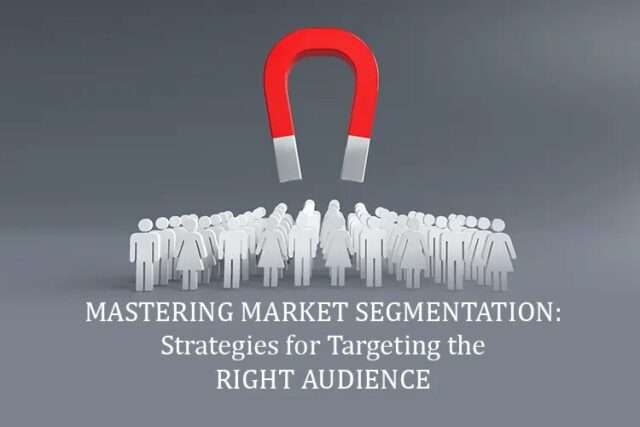
Market segmentation is grouping potential buyers by their similarities. They can be demographic, geographic, psychographic, or behavioral segmentation. The goal is to find unique demographic segments. They will react in the same way to certain marketing activities. This will help companies create campaigns that appeal to each segment.
Importance of Market Segmentation
- Enhanced Customer Understanding: Market segmentation helps businesses know their consumers’ needs. It also makes it possible to make marketing as personal as possible.
- Improved Product Development: This technique helps firms find unmet market needs. It lets them serve those needs with solutions for targeted segments.
- Cost Efficiency: Differentiated marketing is cheaper and more efficient than undifferentiated marketing. Segment marketing can improve marketing efficiency and boost ROI.
- Increased Sales: Segmentation makes it easier to address the needs of various segments. Hence, more consumers will be willing to transact. This will increase conversion rates and sales.
- Competitive Advantage: Companies can gain an edge by using market segmentation. It helps them counter competitors by providing solutions that fit certain customer segments.
Steps in the Market Segmentation Process
Market segmentation is the division of a market into identifiable parts. It is for planning and analysis. This procedure helps isolate the most valuable customer personas. Now the question is, how to conduct the market segmentation? Here are the steps to implement market segmentation strategy are,
- Conduct Market Research Analysis: First, conduct a survey and focus group. They will find out everything possible about the target market. Customer needs and wants are the basis for segmentation. So, customer analysis is key.
- Identify Market Segments: Use the data above to refine the target market segments. There is always a way to group consumers. The best method is to find their shared traits.
- Evaluate Segment Attractiveness: Analyze the size, growth potential, and profitability of each segment. Competitive forces should compare segments. This will help management focus on the most promising ones.
- Develop Segment Profiles: Use split profiles with demographic, geographic, psychographic, and behavioral data. These profiles will help to develop your marketing strategies.
- Create Targeted Marketing Strategies: Make different ads for the segment based on its appeal.
- Measure Results: A key point is to track, over time, a change in sales due to segmentation. You should use this data to modify it more and more as you work through it.
Key Advantages and Disadvantages of Market Segmentation Techniques
Advantages
- Better Targeting: Market segmentation helps the business target specific customer groups. This makes it more effective.
- Improved ROI: This approach helps firms to set their marketing goals. It reaches the right audience in a cost-effective way. It also yields a high return on investment.
- Enhanced Customer Satisfaction: Targeted marketing seeks to meet specific segments’ needs. It yields greater customer satisfaction and loyalty.
- Competitive Advantage: Market segmentation may help achieve a strong position vs. competitors.
- Segmentation, Targeting, and Positioning (STP): It is a strategic model. It helps identify market segments to target. Market segmentation, target audience selection, and product positioning create a competitive edge. This boosts business and marketing performance.
Disadvantages
- Complexity: Market segmentation can be a technical process. It requires deep research and analysis to find and access the potential segments.
- Cost: Market segmentation research may be expensive for small businesses.
- Risk of Alienating Segments: Market segmentation can help target and customize your processes. But if done poorly, it can harm your business and upset customers.
Types of Strategic Market Segmentation
- Demographic Segmentation: This is an easy type of segmentation. It segments consumers by age, sex, income, education, marital status, and other factors. For instance, a business might market its products to young, well-paid workers. They buy luxury products.
- Geographic Segmentation: Market coverage means dividing the market by location: country, region, city, or climate. It allows businesses to sell their products based on local culture and preferences.
- Psychographic Segmentation: This type focuses on the lives, values, interests, and attitudes of consumers. For example, if a brand aims to attract eco-conscious consumers, it will launch a campaign.
- Behavioural Segmentation: This approach sorts of consumers by their behaviour and choices. It considers their buying experience, brand loyalty, and buy frequency. Business organizations can study the behaviour of customers on their products to develop better marketing techniques.
Real-World Examples of Successful Segmentation Techniques in Marketing
- Coca-Cola: Another example of their use of demographic analysis is their different products for different demographics. They have, for instance, various products for different age groups and life stages. Diet Coke is for health-conscious people. Coca-Cola Zero Sugar is for a younger audience.
- Nike uses psychographic segmentation. It targets athletes who love its products. It also targets fashion-conscious customers who want to wear the latest styles.
- Amazon uses purchases and website visits to recommend products. This is part of a common behavioural segmentation technique. It targets customers most likely to buy.
Challenges in Market Segmentation Strategies
Here are the challenges of market segmentation strategies,
- Data Collection and Cost: Gathering data for segmentation can be difficult and costly, requiring significant resources.
- Over-Segmentation: Creating too many segments can confuse marketing strategies and dilute brand identity.
- Dynamic Markets: Segmentation must adapt to changing consumer behaviors and market conditions to remain effective.
The Future of Market Segmentation Process
The field of market segmentation is evolving rapidly in 2025. Businesses are increasingly leveraging innovative technologies and data-driven insights to craft highly personalized customer experiences. The shift towards AI-enhanced personalization, strategies centered on first-party data, and hyper-personalization in marketing is transforming how brands engage with their customers.
AI-Driven Personalization: The New Standard
Artificial intelligence (AI) changes the way market segments are formed since it examines huge volumes of customer data instantaneously. Companies perform better customer purchasing pattern detection which enables them to forecast behavior patterns and deliver personalized customer experiences. AI segmentation enables brands to customize their offers along with content and messaging for separate consumers which improves customer engagement and raises conversion rates.
The Rise of First-Party Data Strategies
The increasing concerns about privacy data during a declining phase for third-party cookies prompts brands to adopt their own data collection methods. The method fits data protection standards while delivering highly accurate customer understanding. Companies divide their audience into specific segments through analysis of how customers use the internet, their purchasing activities and direct customer interactions to create personalized marketing campaigns which prove more successful.
Hyper-Personalization in Marketing
Businesses need to move past their traditional practice of reaching a wide range of consumers. Through the combination of hyper-personalization with artificial intelligence and machine learning technology companies achieve massive-scale customized marketing message delivery. The application of customization along with AI-driven content personalization improves customer happiness alongside elevating user loyalty through recommendation technologies that match users with targeted content. Hyper-personalization delivers maximum benefits within digital advertising as well as software as a service (SaaS) and e-commerce fields.
SEO Optimization for Market Segmentation in 2025
To stay relevant in the highly competitive market, brands need to migrate from traditional content strategy and focus more on AI-driven market segmentation, first party person data, and hyper-personalized marketing of the coming 2025. With the help of the SEO services and correct keywords, you can intermingle them in your headings, blog posts and meta descriptions to give a boost to the search visibility and get a more targeted audience.
Using cutting edge segmentation techniques, businesses can perfectly target their distributors and consumers with highly relevant and well informed marketing activities. The future of market segmentation hinges on predictive analytics, precision, and personalization. This is a good approach for companies to embrace, which would give you a chance to increase engagement and cultivate long-lasting customer loyalty.
Conclusion
Market division analysis is important, regardless of a firm’s marketing tactics. This means that, instead of targeting a broad market, businesses segment it. They do this by finding similar characteristics. The goal is to meet that market’s needs. For business development, the benefits include better customer insights and higher sales.
The market segmentation strategy requires companies to do research. They must assess each segment’s desirability, create descriptions, and develop strategies. They must also test outcomes on a regular basis.
This will give them an edge in today’s unpredictable market. It will also ensure that its recipient enjoys their marketing message. Market segmentation is a useful tool. It helps businesses meet and even exceed customer expectations in today’s competitive world.
Consistent refinement of your market segmentation will keep you ahead of competitors. It will build customer loyalty and grow your business in today’s fast-paced market.
Introduction
It shocks most people to know that about 70% of businesses have no strategy for optimizing their landing pages. Such an unstructured approach may prove very costly to organizations, in terms of lost business and therefore, potential profit. But here is the good news if you use the right landing page optimization tools you can enhance your landing pages, your SEO rankings and subsequently your conversion rates.
Landing pages are usually the first thing people see when they arrive at your website and can be a customer’s first introduction to your brand. An effectively optimized landing page can enhance the conversion rate, lead generation and elevates your online marketing. In this article, let’s look at the landing page optimization tools that will be relevant in 2025, their main benefits and whether they are free or paid.
What is a landing page?
A web page landing is a single page that has been created with the purpose of a particular marketing or advertising promotion. It is the first web page a visitor gets to when they have clicked a link from an email, advertisement or search engine result. However, a landing page is different from any other web page that is designed for comparison or that can serve more than one purpose like generating sales, collecting subscribers, or getting downloads of an eBook. That is why the aspect of a landing page floatation is crucial since it focuses on conversion rates with simple messaging and CTA and intuitive design.
To make your landing pages as effective as possible you need to optimize them.
What Makes Landing Page Optimization Significant?
Having a good landing page is very important in your online marketing for several reasons, first and foremost, landing pages are usually the first point of contact of your target customers with your brand. Landing pages are the main starting point of an offer, if optimized well, a great increase in conversions is expected and so more leads, sales and even more revenues.
The following are the best practices of Landing Page Optimization include A/B testing, Landing page Personalization, Landing Page User Feedback, and Landing page Performance Measurement. Fortunately, it is possible to use optimization tools to set this up in the right way and do better. To help you navigate the wide range of available tools, here are the key features to look for when selecting a landing page optimization tool:
Key Features of Landing Page Optimization Tools
When selecting a landing page optimization tool, consider the following essential features:
- A/B Testing: Enables you to look at two or more pages and see which version of the page performs better.
- Analytics & Insights: Its basic use is for capturing hourly statistics on user activity and landing page effectiveness.
- Drag-and-Drop Builders: Helps design landing pages without any coding skills.
- Integrations: Integration capability with other marketing platforms including the Customer Relationship Management (CRM) and email marketing platforms.
- Mobile-Responsive Design: Ensures that the landing pages are as equally attractive on other devices.
Now that we know the basic best features to focus on, let’s move on to some of the best Landing Page Optimization tools to consider in 2025.
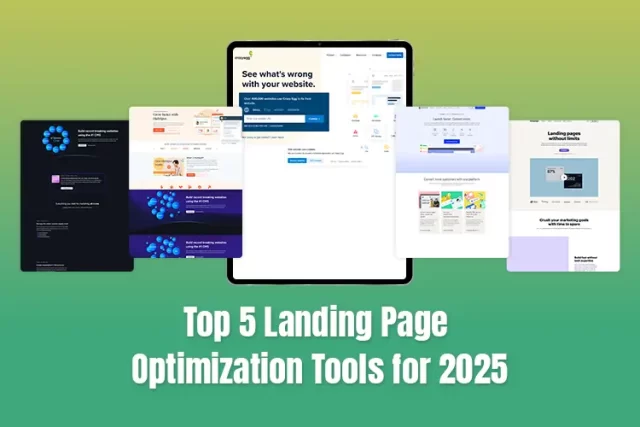
Top 5 Landing Page Optimization Tools for 2025
| Tool | Key Features | Best For |
| Hotjar | Heatmaps, Session Recordings, Feedback Polls, Conversion Funnels | User Experience Optimization, Understanding User Behavior |
| Unbounce | Drag-and-Drop Landing Page Builder, A/B Testing, Built-in Analytics | Creating and Optimizing Landing Pages |
| Optimizely | Advanced A/B Testing, Multivariate Testing, Personalization Tools | Enterprise-Level Landing Page Optimization |
| HubSpot | All-in-One Marketing Platform, Landing Page Builder, CRM Integration | Comprehensive Marketing Automation and Lead Nurturing |
| Crazy Egg | Heatmaps, Scroll Maps, Session Recordings, A/B Testing | Visual Insights for Landing Page Optimization |
1. Hotjar: Visual Insights and User Behaviour Analytics Tool
What It Is
Hotjar gives you valuable visual data about how people use landing pages thanks to its heatmaps. Session stats and user feedback tools help in better decision-making. Hotjar lets us see how people use our pages, so we make better choices to improve them.
What It Does
- Heatmaps to show where users click, move, and scroll on your landing page.
- Session recordings to watch real-time user interactions and identify potential issues or areas of improvement.
- Feedback polls and surveys to gather user insights directly from visitors.
- Conversion funnels to visualize where users drop off in the conversion process.
How It Works
Hotjar uses user actions to generate graphics and video reports on behavior. Hotjar tracks user actions to show how visitors interact with your landing pages which helps you improve their performance.
Who Should Use It
- Marketers and UX designers looking to improve user experience and increase conversions through detailed behavioral insights.
- Businesses of all sizes aiming to make data-driven decisions to enhance landing page performance.
Best For
Businesses focused on user experience optimization, seeking to understand and address user behaviour challenges.
Free or Paid
Hotjar offers a basic free plan, with more advanced features in their paid plans.
2. Unbounce: The All-in-One Landing Page Builder and Optimizer
What It Is
Unbounce makes landing pages with an easy-to-use drag-and-drop tool and templates that meet different industry needs and target outcomes. This tool makes creating action-focused website pages simple, so businesses won’t need to code anything.
What It Does
- A/B testing capabilities to compare multiple versions of landing pages.
- Built-in analytics to track performance metrics like bounce rate, conversion rate, and more.
- Sticky bars and pop-ups to engage visitors and encourage immediate action.
- Templates that are optimized for different industries, such as lead generation, sales pages, and event sign-ups.
How It Works
Unbounce allows users to design landing pages with ease by dragging and dropping various elements (texts, images, buttons) into a pre-designed template. You can then set up A/B tests, analyze results, and adjust improve performance.
Who Should Use It
- Small businesses and agencies who need a fast and easy solution to create and test landing pages.
- Marketers who prefer a no-code solution for creating and optimizing landing pages.
Best For
Businesses looking for an all-in-one landing page builder that includes A/B testing, customizable templates, and tools for lead generation.
Free or Paid
Unbounce is paid only, with a 14-day free trial available.
3. Optimizely: Enterprise-Level Landing Page Optimization Tools for Maximum Impact
What It Is
Optimizely is an enterprise-level web experimentation platform that offers advanced A/B testing, multivariate testing, and personalization tools. It is designed for large enterprises with complex needs across various channels, including websites, mobile apps, and emails.
What It Does
- A/B testing and multivariate testing across websites, apps, and emails.
- Edge computing for fast content testing without affecting page load times.
- Targeted rollout features that allow businesses to personalize landing pages based on visitor data.
- Personalization options that use customer data to deliver customized landing page experiences.
How It Works
Optimizely allows you to run experiments on landing pages and test content variations. You can segment your audience based on their behavior and target them with personalized messages, ensuring higher engagement and conversions.
Who Should Use It
- Large enterprises and businesses with high traffic and complex optimization needs.
- Teams that require advanced testing features and personalized content delivery.
Best For
Enterprises and advanced users who need a comprehensive solution for multi-channel optimization.
Free or Paid
Paid, with custom pricing based on business needs.
4. HubSpot: All-in-One Marketing Platform for Landing Page Optimization
What It Is
HubSpot is an all-in-one inbound marketing platform that includes powerful landing page optimization tools. It helps businesses create, test, and optimize landing pages while also integrating with CRM and email marketing tools for lead nurturing.
What It Does
- Drag-and-drop landing page builder for creating optimized pages without coding.
- Thousands of customizable templates for various industries and marketing goals.
- Integrated lead capture forms that sync with HubSpot CRM for seamless lead management.
- Built-in SEO tools to help your landing pages rank higher in search engines.
How It Works
HubSpot allows you to easily create landing pages with its intuitive builder. After creating the page, you can use HubSpot’s CRM and email marketing features to capture, and nurture leads directly from the landing page.
Who Should Use It
- Businesses looking for a complete suite of marketing tools, including landing page creation, email marketing, CRM, and analytics.
- Companies that need SEO and content optimization features built into their landing page builder.
Best For
Businesses that want an all-in-one solution for marketing automation, lead nurturing, and landing page optimization.
Free or Paid
HubSpot offers a free version with basic features, while paid versions provide additional capabilities.
5. Crazy Egg: Visual Insights for Better Page Performance
What It Is
Crazy Egg is a tool designed to help you understand user behavior on your landing pages using heatmaps, scroll maps, and session recordings. It gives you visual insights into how visitors interact with your page and where improvements are needed.
What It Does
- Heatmaps to track where users are clicking on your landing page.
- Scroll maps to see how far users scroll down your page.
- Session recordings that show how users navigate through your page in real-time.
- A/B testing to compare different versions of your landing page and optimize for better performance.
How It Works
Crazy Egg collects data on user interactions through heatmaps and session recordings. It also offers A/B testing to help you test and optimize landing page elements based on user behavior.
Who Should Use It
- Marketers and UX/UI designers who want detailed visual insights into user interactions.
- Businesses that want to improve their landing page content and user experience.
Best For
Businesses that want a tool focused on user behavior analytics to improve landing page performance.
Free or Paid
Paid, with a 30-day free trial available.
With a better understanding of these tools, it is time to explore how to choose the right one that aligns with your business needs and goals.
What Tool is Right for Your Business
When selecting the best landing page optimization tool, consider the following factors:
- Budget: Select a tool within the financial bouquet of your business. While some of these tools allow you to use them for free or give you a trial, some you sign up for a subscription.
- Ease of Use: Select tools that are easily understandable tools which may not necessitate training of workers.
- Integration Needs: The tool should easily be compatible with your current CRM, email marketing, and analytics systems.
It will also benefit you to follow the best practices to be in the right side of the fence when it comes to harnessing the capabilities of selected tool for business operations.
Landing Page Optimization Tools – Guidelines for Using
To maximize the effectiveness of your landing page optimization efforts, follow these best practices
- Set Clear Goals: Several success indicators, such as conversion and bounce rates, should be clearly determined before beginning any optimizations.
- Test Regularly: Make sure to always test different aspects of your landing page through A/B, to see what could work better.
- Optimize for Mobile: Make sure your landing pages are optimized for mobile since most users access your links through their mobile devices.
- Use Data-Driven Decisions: Make sure heatmap and A/B test data, as well as session recordings, inform your optimization plan.
Conclusion
Choosing the perfect landing page optimization tools can be a huge turning point in your marketing in 2025. Encompassing solutions like Unbounce and Optimizely are used to enhance your landing pages, increase your conversion rates, and ultimately, enhance your marketing profitability.
Suppose you are a new business that still has not had the experience of using Hotjar for free or a large business that needs the enhanced features only available in Optimizely. In that case, you will discover that there is a tool for everyone. Following the information given above, you will be able to optimize the landing pages to the maximum achieving the best result that you can think of as far as your online presence is concerned.
Enhance your landing page performance today! Contact Startmetric Services for a free consultation.
]]>
Maximize Your ROI with Inbound Marketing
Do you know that inbound marketing can make up to three times the number of leads that outbound marketing can make? Besides, it has a cost of 62% less. Isn’t that amazing? This just confirms how powerful this marketing strategy is when it comes to expanding your business & achieving sustainable ROI.
Some more insights & best practices will be provided to you so that you are able to attract, capture, & nurture your audience. We will also discuss content marketing, social media, CRO, SEO, email marketing and automation tools.
What is Inbound Marketing and Why Is It Crucial for ROI in 2024?
Inbound strategies attracts customers towards your business organization through the provision of valuable information. It is very different to outbound marketing where the marketer simply wants to interrupt the consumer with a message. On the other hand, inbound gives the customers exactly what they want.
In other words, it is about creating content that communicates to your target customers. In this case, the available options are blog posts, social networks, SEO, and email to prove the worth of the business. This way is helping to develop trust within the target group of folks that you are trying so hard to get through to.
Inbound vs Outbound Marketing
Inbound marketing is different from outbound marketing. Inbound marketing targets customers with valuable content that includes blog posts, posts, or tweets. Outbound marketing prescribes information to people, when we see it, or hear it, it might be ads or maybe cold calls, and we really do not like it.
- Inbound: Things are informative and useful. Outbound: It is all about selling. The stuff you create for inbound is educational & valuable, outbound stuff is more about making sales.
- Inbound relies on website and social media while outbound is fixated on printed media and cold calls. Inbound marketing attracts customers while outbound marketing pushes messages out.
- Inbound uses digital channels like search engines & social media; outbound sticks to print ads and cold calls. Inbound is cheaper & works better got to love that ROI.
Understanding the differences between inbound and outbound marketing can really help businesses connect with their audience better. It leads to a stronger marketing strategy.
“Inbound marketing is about creating valuable experiences that pull customers in naturally rather than pushing promotional messages out to them.” – Brian Halligan, Co-Founder & CEO of HubSpot
How to Maximise ROI with Inbound Marketing Strategies
Using inbound strategies can seriously pump up your return on investment (ROI). By choosing the right strategies, you will get the most out of it. Better results and smarter marketing await.
Creating useful content is super important when using marketing strategies. Be sure your content is informative, engaging, and relevant. This way draws potential customers in naturally. Use blog posts, videos, and info-graphics to give real value to your audience.
Make sure people can find your website online easily. Use SEO tricks to boost your site’s ranking. This helps bring in more visitors who can turn into customers.
- Connect with your audience using social media. Share your great content & chat with followers. It really boosts your brand’s presence!
- Send targeted emails to nurture leads. Personalized messages guide potential customers through sales.
- Keep an eye on how your inbound efforts are doing so you can see what works or doesn’t work as well. Use this information to adjust strategies & boost ROI.
With a solid inbound plan in hand, you unlock amazing potential for your marketing. Focus on creating valuable content & engaging with people online. This will drive impressive returns on what you have invested.
Strategy Description and Impact on Digital Marketing ROI
- Content Creation: High-quality content that attracts and keeps target audience engaged Increased organic traffic, improved brand awareness, higher conversion rates
- SEO: Optimize website/content for better visibility/ranking More qualified leads, higher volume of traffic from search engines
- Social media: Engage on social media platforms Build community, increase referral traffic, larger pool of potential leads
- Email Marketing: Use email for lead nurturing Higher conversion rates, increased customer lifetime value.
Mix these tactics together & watch your ROI shine. This approach leads to long-term growth for your business.
How Does Inbound Marketing Nurture Leads Across the Buyer’s Journey
It assists in working through leads at every stage of their buying cycle. Firstly, it provides them information in form of blog posts and videos to know about their problem. Next, it provides information about all the offers in detail for the buyer to enable him or her to make the right decision and last it envelopes promotional offers that would make the buyer complete the purchase.
How Inbound Marketing Strategies can be Refined to Optimize Conversion Rates
For inbound marketing to be even better, organizations can look at the data to find what improves it. This way, they should be able to determine what kind of content and emails people enjoy most. That is, getting more people to buy can also be helped by tailoring messages according to what customers do.
Specific CRO Techniques: How They Align with Inbound Marketing for ROI Growth
Conversion Rate Optimization (CRO) best practices assist more people respond to your online call to action.
Here are some simple strategies
- A/B Testing: Use two different versions of the page to find out which one is preferred.
- Optimize CTAs: Always ensure if you create buttons that guide people on what they need to do that they are easily visible. Use simple and short sentences, avoid long pauses, amazing effects and pick bright colours and use strong words.
- Simplify Forms: Make the forms simple and only require the subject of the most crucial information needed, for the study. This makes it easier for the users to fill them out.
- Use Social Proof: To gain customer trust, show results of previous customers who have used the products. It will be positive for encouraging new visitors to make purchases.
- Improve Page Load Speed: Ensure that your website takes a short time to load.
Applying one or the other of these techniques can increase conversion rates and your overall performance.
The Heart of Inbound Strategies for ROI Growth
Content marketing is at the heart of a good inbound strategy. It helps draw people in & keeps them interested until they act you want.
Creating Compelling Content
To rock at content marketing
- Know who your audience really is: What do they need? What do they want?
- Plan out your content: Use a calendar so things are regular.
- Tell stories: Stories tap into people’s emotions.
- Always give value: Make it useful or informative.
- Be unique: Find a voice that stands out.
Content Distribution Strategies
Once you have made awesome content, share it everywhere.
- Make it easy to find. Use SEO so people can discover your content better.
- Do not leave out social media. Share content and engage.
- Work together with influencers this expands your reach.
- Keep emailing subscribers, let them know what is new.
- Mix formats. Turn content into videos or info-graphics.
Nail down content marketing along with those five basics of inbound strategy and watch how that helps attract and convert audiences.
“Content marketing builds a strong connection with the people you want.”
Leveraging Social Media for Inbound Success
Social media plays a huge part in inbound marketing, it connects businesses with their audiences while helping build brands too. Get those valuable interactions going and spread the word about your content. It will help you get new leads.
Unlike old-school methods that push ads outwards, social media lets you talk directly with people who matter most. Build strong bonds by listening to their needs while sharing solutions through great content.
Tips for Social Media Success
- Create fun social posts like cool visuals or blogs.
- Use platforms smartly to get what you have made seen by more eyes.
- Listen closely on social media so you can spot trends or tell what is needed.
- Ask industry influencers for support. Teamwork makes the dream work after all.
Integrating social media into the mix of inbound gives loyal fans who bring great leads.
The Importance of Search Engine Optimization (SEO)
SEO is super important for a solid inbound strategy. It gets you seen more often in search results. On-page/Off-page SEO makes magic happen.
On-Page SEO Techniques
This makes improving sites easier for search engines
- Do keyword research finding ones that fit business best
- Fix up page titles & meta descriptions featuring chosen words
- Good-value stuff written so visitors stick around
- User-friendly designs are easy and keep navigation easy.
Off-Page SEO Strategies
This deals with what exist outside websites affecting search rankings
- Get good-quality backlinks from reliable sites
- Join online groups/socio forums boosting brand awareness
- Distributing guest blog posts reaches broader audiences
- Keep track of reputation fixing bad mentions quickly
Boost Local Searches via Optimized Listings
Mixing both approaches improves ranking chances, leading straight into gaining many new leads.
Email Marketing: An Inbound Essential
Email remains an essential tool in this game. It nurtures relationships while driving conversions too.
Lower cost + boost effectiveness = killer combo
Use automated workflows letting important messages send at timely moments welcoming contacts/new sign-ups reminding abandoned carts encouraging soft conversions go smoothly throughout interactions.
“Email’s magic keeps brands close-by driving sales transforming any tactic.”
Inbound Marketing Automation Tools
Start optimizing your inbound marketing strategy today with these tools.
Inbound marketing automation tools are key for making your marketing work better and faster. They help with everything from making content to taking care of leads. This makes your marketing more efficient and helps you reach your goals.
These tools save you time and money. They handle tasks like posting on social media and sending emails. This lets your team work on bigger, more important tasks. It also makes sure your leads and customers get a better experience.
There are many inbound marketing automation tools out there. Some popular ones include:
When picking a tool, think about your business size, industry, and marketing needs. Make sure it works well with your current technology and workflows.
| Tool | Key Features | Pricing |
| HubSpot | Content creation, lead management, analytics | Starts at $20/month |
| Marketo | Lead nurturing, email marketing, campaign management | Starts at $1,026/month |
| Pardot | B2B marketing automation, lead generation | Starts at $1,250/month |
| Drip | Email marketing, e-commerce automation | Starts at $39/month |
Bottom Line
Inbound marketing is key, but a full marketing plan needs both inbound and outbound. Mixing these two can boost your marketing power. It helps get more leads, engage customers, and grow sales.
Outbound marketing, like cold calls and trade shows, can help reach new people. It starts important talks. When you match your inbound content with outbound efforts, you hit your audience in many ways.
Using both inbound and outbound marketing can catch more potential customers. It guides them through the sales process and increases conversions. A complete marketing approach sets your business up for success in the digital world.
]]>
Introduction
In the present world of Internet advertising, getting identified is not easy.
Sometimes, it appears as one is literally shouting into an empty hall, and hoping someone listens to the brand, even if it provides excellent products or services. Remarketing vs Retargeting, both strategies becomes necessary in this situation.
With the help of these giants of digital marketing, you could turn those potential customers ever seen to rivals into fans.
But what is the difference between Remarketing and Retargeting?
How can the two be utilised to the maximum and encourage clients to make more purchases in the Market?
In this guide, we are going to explain what Remarketing and Retargeting terms are, provide some actual examples of the respective campaigns, and reveal the secrets of using this tool as efficiently as possible. Plus, we will develop some important digital marketing initiatives to help you start well.
Remarketing vs Retargeting: The Difference
Now, what is the main difference between Remarketing and Retargeting is the fact that both phrases belong to digital marketing and serve different functions in it.
Remarketing
Remarketing should be aimed at capturing those that have had an initial interest in your business. Often it includes the use of the advertisement banners to the users who have been to your site or those who have bought something from you. They are so useful in the remarking strategy because the overall aim is to develop the existing relationship with the customers and get them to come back for more products.
Remarketing: Example
- An example of Remarketing is sending emails to those regarding abandoned carts with the purpose to remind the customer to complete the purchase. E-commerce is where you are looking for a product, carrying it to the shopping cart, but due to some reason you are distracted and leave the site. Following that, you will receive an email notifying you of items left behind, and at times with a code to complete the transaction.
- This is the most basic Remarketing to conversion that one can come across in the modern world.
Some of them include emails that are sent after a purchase has been made.
Retargeting
Retargeting is directed toward the target audience as those visitors who came to the site but did not make a purchase. These visitors are tracked by use of cookies and advertisers are then allowed to post ads relevant to the website that these visitors have been visiting. It is whereby you must constantly remind them of your brand and mobilize them to take the desired action of buying.
Retargeting: Example
The final product of the Campaign is to Keep Star Auto Top of Mind The campaign can be summarized by the tagline “Keep Star Auto Top of Mind”.
- Retargeting, simply is about keeping the customer or potential buyer aware of your business or your product. For instance, if you are buying running shoes online and you quit from the website, you might experience the same shoes being advertised to you in another website. These are kind of ads that Retargeting and make you remember your interest in the product and thus complete the purchase.
- The Retargeting strategies can also be used to market and advertise certain products based on the browsing history. For instance, if one is browsing through homes in each neighbourhood via a real estate site, he or she might be served home ads in the same region on other sites.
- Facebook advertising is the most common way of reaching the audience again at this stage, and social media retargeting ads are specific for this purpose. For instance, if a consumer gets to your site and then goes to Facebook, he sees an ad which contains an offer or a review that will make him purchase.
This is where the magic of targeted digital marketing tools happens.
How to Decide If Your Business Needs Remarketing or Retargeting
To determine whether your business needs Retargeting or Remarketing, consider the following factors-
-
Business Goals
Ensure that prospects are given follow-up messages of the items they viewed in the site through remarketing with an aim of making subsequent purchases.
Retargeting to make people aware of the brand and to bring in new clientele.
-
Target Audience
Using Remarketing is perfect for targeting people who left their carts on the site.
Retargeting work is fine when trying to engage with the visitors who had not put their order.
-
Budget and Resources
Retargeting entails the use of a bigger advertisement budget.
Remarketing is relatively cheaper through a combination of, email marketing and social media advertising.
-
Compatibility with Existing Channels
Be very certain that the social media platforms used can support these strategies well enough.
Some of the digital marketing tools provide both Remarketing as well as Retargeting choices.
-
Stage in the Customer Journey
Retargeting is also effective in the initial stages because it gets the attention of the audience.
Therefore, Remarketing is highly effective and beneficial at each stage of the process of customer relations to support continued business.
To be more exact about it, below are some ways on how you can accurately measure the success of your campaigns.
To Evaluate the Success of your Remarketing vs Retargeting Campaigns, Monitor these Key Metrics
- Click-through rate (CTR): This calculates the number of persons who eventually click on your advertisements or the ones receiving your emails.
- Conversion rate: This measures the number of persons that take a specific call to action like purchasing a particular product after clicking an advertisement or an email.
- Return on ad spend (ROAS): This is the measure used to compare the revenue obtained from the campaigns and the expenditure you make on online advertising.
With such metrics, you will be able to work on performance of your remarketing and retargeting campaigns, in a bid to boost on your sales.
Best Platforms for Remarketing and Retargeting
Selecting a proper platform is the initial stage in a successful campaign.
Some of the best platforms for Remarketing and Retargeting are.
- Google Ads: Since Google has a broad network of users, it can reach out to them based on the history of the websites they have visited; thus, making it the best option for Retargeting.
- Facebook and Instagram: Through facebook and instagram Remarketing, you target users that have an interest in your brand, part of a specific demography or have been interacting with your brand in one way or the other.
- Email marketing platforms: Most platforms such as Mailchimp, HubSpot and Constant Contact enable you to conduct a Remarketing campaign through email marketing whereby you present your past customers with relevant offerings.
Conclusion
Remarketing vs Retargeting: Both are important marketing tactics for any business to reconnect with prospective buyers and increase conversion rate. Retargeting seeks to regain attention using paid ads across a variety of platforms. Both strategies, when used wisely, can improve customer loyalty and increase brand awareness.
That is where StartMetric Services comes in with an all-encompassing service including email marketing, social media advertising, Google Ad retention and automation to help you get the most out of your remarketing ad Revenue. Take your digital marketing efforts to the next level with us.
]]>
Ever wonder how companies find their customers and become successful? In the business world, marketing acts like a watchtower, connecting a company with the people who are interested in its products or services. Marketing functions uses a variety of promotional techniques to capture consumer attention and drive sales.
It is not a one-size-fits-all approach; Marketing is a multifaceted team effort. From catchy ads to pricing, quality control, and customer data collection, let’s dive into 7 functions of marketing that play an important role in helping marketing businesses grow and thrive, and let’s look at how they work together to achieve business success.
Why Marketing Functions Are Important for Business Growth
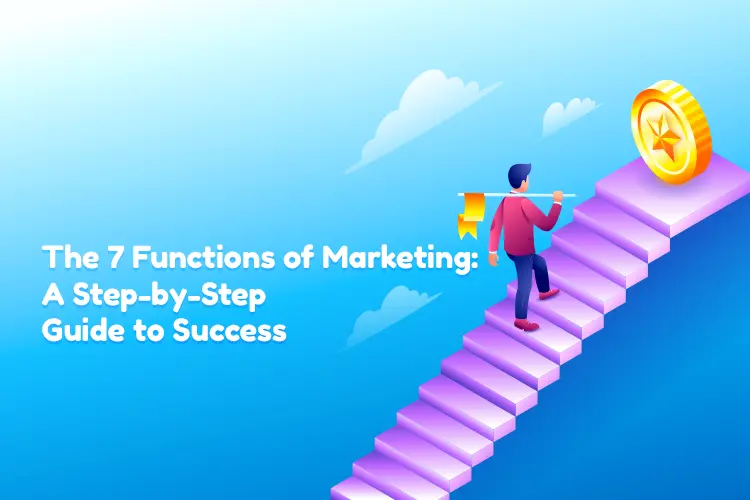
Think of the marketing functions as a ladder to success. Every project is like a stepping stone that helps businesses move forward. They are super important because they guide companies towards their goals in the marketplace. What makes commercial work or growth exciting, are you good at selling, managing products and services, calculating prices, doing market research for important information, managing money wisely, or you plan distribution – every step is critical to marketing Success.
When all these aspects come together, companies can create awesome marketing strategies that resonate with their audience and help them grow and generate more revenue.
Top 7 Functions of Marketing That Drive Business Growth
Marketing is something you can not ignore if you want your business to thrive. It is like the relationship between a company and its customers. There are many aspects that all contribute to business growth and revenue. While marketing may seem like one big thing, it is an important part. In this blog post, we will discuss Top 7 functions of marketing and look at how they all work together for business success.
1. Promotion: Building Connections with a Compelling Brand Story
Promotion, therefore, is not just about ‘creating awareness’. It involves developing innovative material that would appeal to the intended clients. That is, when used as a part of Internet marketing, promotional campaigns can contribute to trust and a long-term partnership.
- Key Strategy: Implement IMC (Integrated Marketing Communications) to point all your promotional activities in the same direction whether you are using content marketing or social media advertising techniques. This continuity guarantees your brand channel gets the intended message across to the targeted populace effectively.
- Pro Tip: Do not forget to add a strong direct action or CTA, which will entice the target audience to respond – for instance, taking an online subscription, making an order, and others.
2. Selling: Building Customer Loyalty
Sales strategy are not only making a sale and moving to the next customer, but it is about creating ways to make the customer come back for more purchases.
- Understanding the Sales Funnel: Be a good fit to its smoothly process at the level of working with customers and choose an appropriate strategy that will help to attract a client, create demand for a product, appeal to their desire to buy it at every stage of the buying process. Such a structured approach helps in putting trust of the customer and hence helps in converting the visitor.
- Pro Tip: When enhancing the transactions, make sure you apply cross-selling and up selling methods to gain extra revenue from every client.
3. Product/Service Management: Innovating for a Competitive Edge
Product management is about more than quality—it is about adapting to trends and customer needs. Staying ahead requires continuous innovation and smart market research.
- Key Strategy: Keep an eye on competitors and listen to customer feedback to adjust your products or services effectively. This approach ensures you stay relevant.
- Pro Tip: Consider predictive analytics to anticipate customer needs and refine your offerings for better alignment with market trends.
4. Pricing: Leveraging Strategies for Profit and Trust
Pricing can indeed be a tricky business. Psychologically and competitively priced products can determine customers’ purchasing habits, trust, and ultimately effect their revenues.
- Key Strategy: Customers should also know the value they will get from your product through use of value-based pricing.
- Pro Tip: Experiment with some psychological pricing techniques which can include offering product at $9.99 instead of $10 to try and make prices more attractive.
5. Marketing Information Management: Leveraging Data for Insightful Decisions
Data management is a critical factor in consumer behaviour analysis and the prediction of future behaviour. As a result, customer information and customer analysis help businesses to maintain consumer relevance in the market.
- Key Strategy: Most of these can be achieved by predicting the trends based on analytics and big data and making specific marketing campaigns for individuals.
- Pro Tip: Compliance with the data protection regulations to uphold higher level of ethical practices that shall reflect on the customer.
6. Financing: Supporting Business Growth Through Smart Investments
Marketing financing on the other hand is not a simple process of funding. New methods can be also useful such as crowdfunding for innovative ideas that can help start up to grow faster.
- Key Strategy: Carry out market research to assess the likely payback on marketing costs.
- Pro Tip: To a certain extent, relate to the effectiveness of your company’s marketing budget, make it a habit to track your financial performance.
7. Distribution: Reaching Customers Efficiently
Efficient distribution means delivering products to customers on time while keeping logistics costs low. Optimizing this function can enhance customer satisfaction and profitability.
- Key Strategy: Choose distribution channels that align with your business objectives and audience preferences.
- Pro Tip: Implement Inventory Management Optimization to minimize stockouts and reduce costs.
By incorporating these additional indicators, companies can gain a deeper understanding of these 7 functions of marketing and better execute strategies to achieve their goals.
Make sure your distributors and supply chain managers are well-informed when planning major marketing campaigns. Marketing influences multiple facets of your business, offering insights that improve daily operations and strategic decisions. The goal is to achieve business success through effective marketing strategies.
Conclusion: Bringing It All Together for Business Success
Evaluation of these 7 functions of marketing becomes crucial for the overall business development and, particularly, customer outreach. When each of the functions are managed strategically, firms create a coherent marketing model that adds value and ensures the creation of long-term customer relationships. Regardless of a person’s level of experience in marketing, all these functions can serve as a useful model.
Whether you are an experienced marketer or just starting, understanding these functions is essential for success in today’s competitive business landscape. For expert guidance and tailored solutions, consider leveraging StartMetric Services comprehensive digital marketing strategies.
]]>Subheading Level 2
You can use bold text, italic text, and combine both styles.
- Bullet list item #1
- Item with bold emphasis
- And a link: official WordPress site
- Step one
- Step two
- Step three
This content is only for demonstration purposes. Feel free to edit or delete it.
]]>